

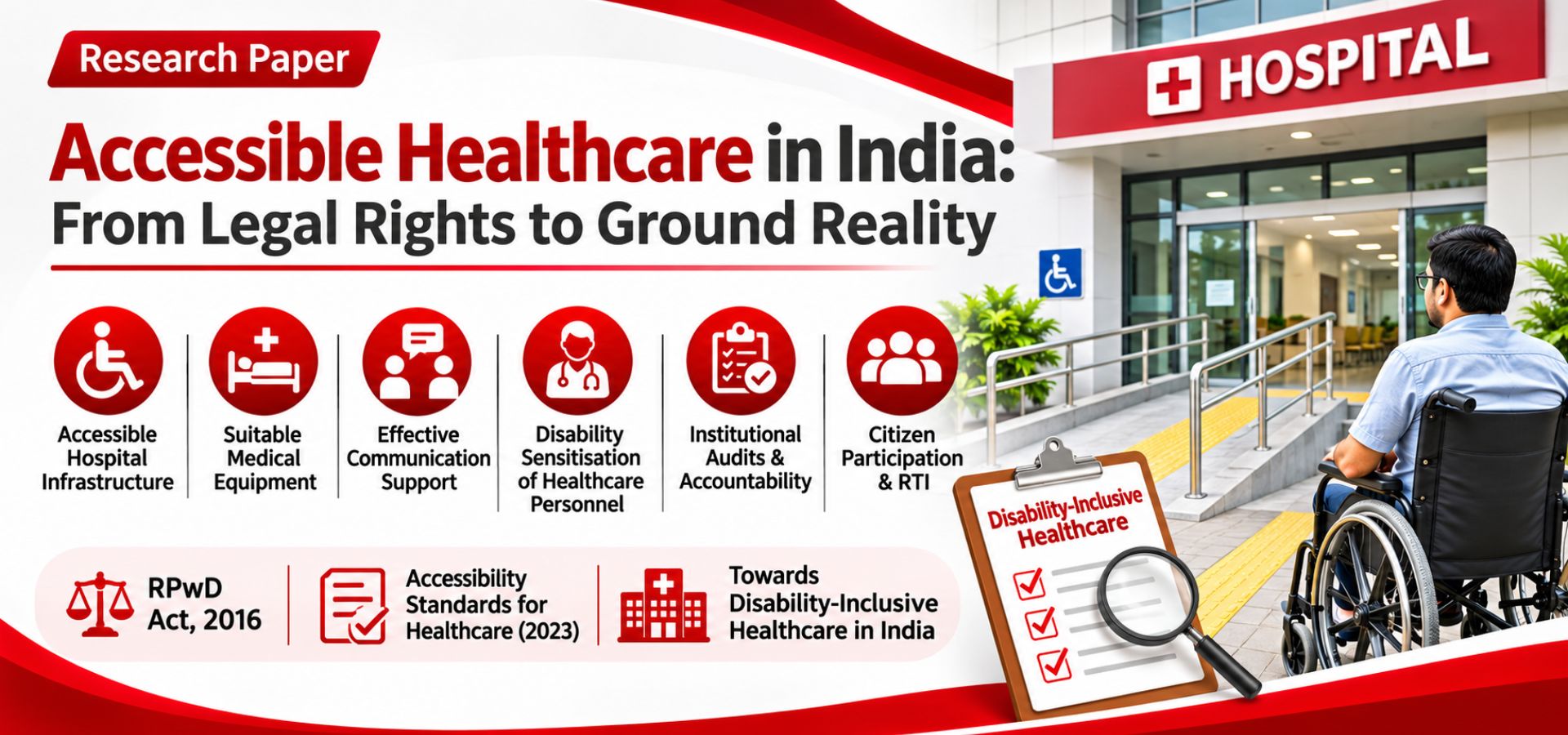
Healthcare is a fundamental component of human dignity, equality and social participation. However, persons with disabilities in India continue to encounter multiple barriers while accessing healthcare facilities, including inaccessible hospital infrastructure, unsuitable medical equipment, communication difficulties, inadequate disability sensitisation among healthcare personnel and institutional shortcomings.
The Rights of Persons with Disabilities (RPwD) Act, 2016, establishes important legal obligations concerning healthcare accessibility, non-discrimination and barrier-free access. Furthermore, the Accessibility Standards for Healthcare issued by the Ministry of Health and Family Welfare were given statutory force in 2023, providing a more comprehensive framework for accessible healthcare institutions.
Despite these developments, an important question remains: how effectively are these legal and policy commitments reflected in the everyday functioning of government hospitals? This article examines the legal framework, institutional responsibilities, accessibility barriers and accountability mechanisms governing disability-inclusive healthcare in India. It also proposes a practical framework for assessing hospital accessibility through institutional audits, public disclosure, citizen participation and the Right to Information Act, 2005.