
Climate change and disaster events threaten human security, livelihoods, infrastructure and sustainable development. Their effects, however, are not experienced equally. Persons with disabilities may face additional barriers before, during and after emergencies when warnings, evacuation routes, transportation, shelters, healthcare and recovery programmes are not accessible. These barriers are shaped by institutional design, social inequality and exclusion from decision-making rather than by impairment alone.
This paper examines disability inclusion in climate change adaptation and disaster risk reduction through an international human-rights perspective. It analyses the Convention on the Rights of Persons with Disabilities (CRPD), the Sendai Framework for Disaster Risk Reduction 2015–2030, the Sustainable Development Goals and selected national policy approaches in India, Japan, Australia, the United States and the United Kingdom. It also analyses selected findings from the UNDRR 2023 Global Survey on Persons with Disabilities and Disasters, which received 6,342 responses from 132 countries.
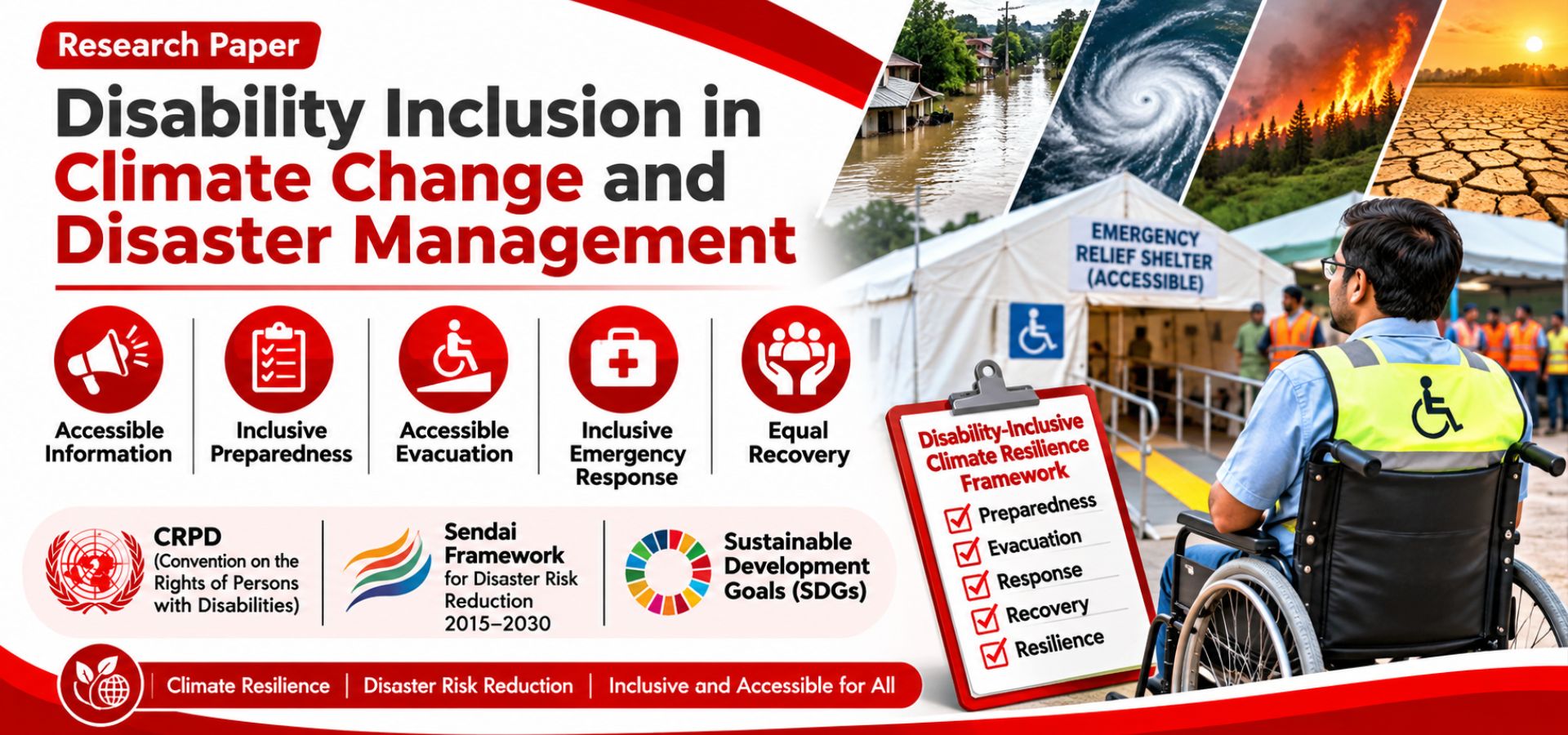
The study uses qualitative doctrinal and comparative policy analysis based on international instruments, government guidance, institutional reports and published research. It proposes a five-pillar Disability-Inclusive Climate Resilience Framework comprising accessible information, inclusive preparedness, accessible evacuation, inclusive emergency response and equal recovery. The paper argues that disability inclusion must be treated as a core requirement of climate resilience and disaster governance, supported by universal design, meaningful participation, adequate financing, disaggregated data and accountable institutions.